Source White PP Kitchen Colander for Draining, Washing, and Storage
Compare 30 white pp kitchen colander options from verified Chinese manufacturers. These storage bowls feature FDA and LFGB certifications, custom logos, and varying capacities for efficient kitchen use.
Key considerations
Products List





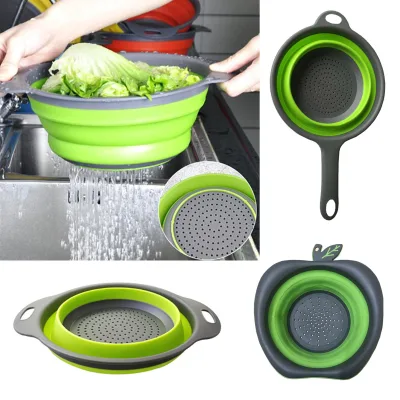


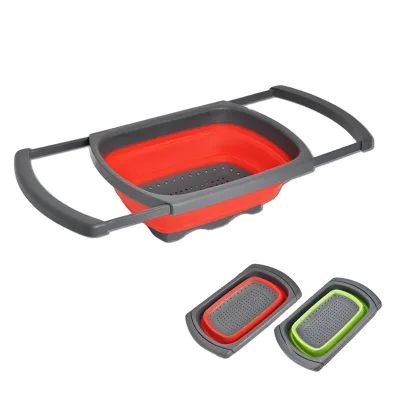
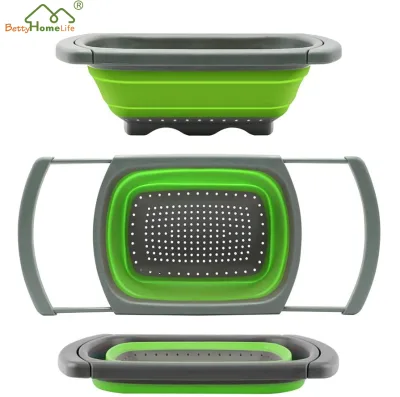

Comprehensive Sourcing Guide
Strategic Sourcing Guide for White PP Kitchen Colanders
Understanding Product Specifications and Material Composition
When sourcing a white PP kitchen colander, the primary focus must be on the material integrity and dimensional consistency. Polypropylene (PP) is the dominant material observed in this category, selected for its resilience against moisture, resistance to chemical detergents, and ability to withstand repeated washing cycles without degrading. The specific product attributes indicate that these items are designed primarily for kitchen storage and usage, functioning as bowls or colanders for vegetables and fruits.
The physical specifications vary significantly across different models, which directly impacts their utility. For instance, one observed model, designated SY26007, features a standard dimension of 42.532.50.4cm and a weight of 206.2g. In contrast, model SY753560 presents a different profile with dimensions of 32.526.513.5cm and a weight of 193.6g. Another variant, SY753515, is notably lighter at 66g with dimensions of 32187.5cm. These variations suggest that buyers must carefully match the product standard to their specific operational needs, whether for heavy-duty draining or lightweight storage. The "Medium" spec classification often implies a balance between capacity and handling ease, suitable for general household or commercial kitchen environments.
Packaging is another critical specification. The standard packing method observed is "Stacked," which optimizes space during transit. The quantity per carton (Qty/CTN) fluctuates based on the model size; for example, the SY26007 model ships with 48 pieces per carton, while the smaller SY753515 model allows for 120 pieces per carton. Carton dimensions also vary, ranging from 494139cm for smaller units to 63.54466cm for larger assemblies. Understanding these logistical parameters is essential for calculating freight costs and warehouse storage requirements.
Compliance, Certification, and Safety Standards
For kitchenware intended for food contact, regulatory compliance is non-negotiable. The supplied data confirms that products in this category often carry FDA and LFGB certifications. These certifications are critical indicators that the PP material has been tested for safety regarding food contact, ensuring that no harmful substances leach into food items. The FDA certification aligns with United States standards, while LFGB (Lebensmittel- und Futtermittelgesetzbuch) represents the stringent German and European food safety regulations.
Buyers should verify that the specific supplier can provide current, valid certificates for these standards. While the data lists "FDA LFGB" as a product attribute, it is an observation of available listings rather than a guarantee for every single unit produced. Procurement teams must request the actual test reports to confirm that the specific batch of white PP colanders meets these safety thresholds. Additionally, the "Eco-Friendly" attribute observed in some listings suggests that manufacturers may be utilizing recycled PP or processes that reduce environmental impact, though this should be verified against specific sustainability claims rather than assumed.
The absence of other specific certifications in the provided text, such as BPA-free specific testing, does not negate the importance of this check. Since PP is generally considered BPA-free, the primary focus remains on the migration limits defined by FDA and LFGB. Buyers should ensure that the supplier's quality assurance protocol includes regular third-party testing to maintain these certifications, especially given the high-volume nature of the industry.
Cost Drivers and Pricing Dynamics
The pricing for white PP kitchen colanders is influenced by several factors, including material costs, customization requirements, and order volume. The observed price range in the market spans from $0.10 to $55.00 USD. This wide variance is not necessarily indicative of quality differences alone but often reflects the scale of the order, the complexity of the design, and the inclusion of value-added services like custom branding.
The Minimum Order Quantity (MOQ) is a significant cost driver. While some suppliers may offer low MOQs starting at 1 unit for sampling or small retail needs, the data indicates a common MOQ of 1000 pieces for bulk orders. Adhering to higher MOQs typically lowers the unit cost due to economies of scale in molding and production. However, buyers must balance this against their inventory turnover rates to avoid overstocking.
Customization is a key variable in pricing. The availability of "Customized" logos and "Pantone color" options adds to the production cost. While the core product is white, the ability to match specific brand colors or add printed logos requires additional setup fees and potentially longer lead times. The lead time observed is approximately 20 days, which is a standard duration for production and shipping preparation. Buyers should factor this into their supply chain planning, especially if they are launching a new product line or restocking during peak seasons.
Typical Applications and Functional Versatility
White PP kitchen colanders are designed for versatile use within the kitchen environment. The primary application is storage and drainage, specifically for washing and draining vegetables, fruits, and other food items. The "Stacked" packaging feature suggests that these colanders are designed to nest or stack efficiently, a crucial feature for commercial kitchens where storage space is at a premium.
The material properties of PP make these colanders suitable for hot and cold water applications. They are resistant to warping and cracking, which is essential for items that may be subjected to hot water rinsing or dishwasher cleaning. The "Eco-Friendly" and "Stocked" attributes indicate that these products are ready for immediate deployment in supply chains that prioritize sustainability and quick turnaround.
In commercial settings, such as restaurants or catering services, the durability of the PP material ensures a longer lifespan compared to cheaper plastics. The weight variations observed, from 66g to 206.2g, allow buyers to select products based on the intensity of use. Heavier units (e.g., 206.2g) are likely better suited for heavy-duty commercial use, while lighter units (e.g., 66g) may be ideal for retail packaging or lighter household tasks. The "Good quality" descriptor often associated with these items reinforces their suitability for professional environments where reliability is paramount.
Supplier Evaluation and Selection Criteria
Selecting the right supplier requires a rigorous evaluation process that goes beyond the initial product listing. Buyers should prioritize suppliers who demonstrate transparency in their manufacturing processes and provide clear documentation for certifications. The origin of the products is consistently listed as China, with specific mentions of Guangdong as a production hub. This region is known for its robust manufacturing infrastructure, but buyers must still conduct due diligence on the specific factory's capabilities.
Key evaluation criteria include the supplier's ability to meet the specified MOQs and lead times. The observed delivery time of 20 days should be confirmed as a realistic estimate for the specific order volume. Additionally, the supplier's flexibility regarding customization is crucial. The ability to provide "Customized" logos and specific Pantone colors indicates a mature production line capable of handling bespoke requests.
Buyers should also assess the supplier's quality control measures. While the data mentions "Eco-Friendly" and "Stocked" attributes, the actual quality of the PP material must be verified. This includes checking for consistency in wall thickness, color uniformity, and structural integrity. The presence of multiple product models (e.g., SY26007, SY753560, SY753515) suggests that the supplier has a diverse catalog, which can be beneficial for buyers looking to source a range of sizes from a single source.
Quality Control and Inspection Protocols
Implementing a robust quality control (QC) protocol is essential to ensure that the delivered white PP colanders meet the required standards. Given the variations in weight and dimensions across different models, visual and dimensional inspections should be a standard part of the acceptance process. Buyers should verify that the physical dimensions match the specified standards, such as the 42.532.50.4cm for the SY26007 model or the 32.526.513.5cm for the SY753560 model.
Material integrity is another critical aspect of QC. Since the product is made of PP, it should be free from cracks, bubbles, or discoloration. The "White" color specification must be consistent across the batch, with no yellowing or uneven shading. The "Eco-Friendly" claim should be supported by material safety data sheets (MSDS) or specific test reports confirming the absence of harmful additives.
Packaging inspection is also vital. The "Stacked" packaging method must ensure that the products are protected during transit. The carton dimensions and weight (e.g., 11/10kgs G.W./N.W. for the SY26007 model) should be verified to ensure that the shipping documents match the physical shipment. Any discrepancies in the number of pieces per carton (Qty/CTN) should be addressed immediately to prevent inventory shortages.
Long-Term Procurement and Supply Chain Stability
For long-term procurement, stability in the supply chain is paramount. Buyers should establish relationships with suppliers who can consistently meet the 20-day lead time and maintain the quality standards required for FDA and LFGB compliance. The ability to scale production up or down based on demand is a key indicator of a reliable supplier.
Sustainability is an increasingly important factor in long-term procurement. The "Eco-Friendly" attribute suggests that the market is moving towards more sustainable materials and processes. Buyers should inquire about the supplier's long-term plans for sustainability, such as the use of recycled PP or energy-efficient manufacturing practices. This not only aligns with corporate social responsibility goals but also future-proofs the supply chain against potential regulatory changes regarding plastic usage.
Finally, buyers should consider the total cost of ownership, which includes not just the unit price but also shipping, handling, and potential costs associated with returns or defects. The wide price range observed ($0.10-$55.00) highlights the importance of selecting a supplier that offers the best value for the specific quality and service requirements of the buyer. By focusing on these long-term considerations, buyers can ensure a stable and efficient supply of white PP kitchen colanders for their operations.
FAQs
What certifications do white pp kitchen colanders have?
Products in this category often carry FDA and LFGB certifications to ensure food safety. These standards verify that the polypropylene material does not leach harmful substances, making them suitable for washing vegetables and fruits in both household and commercial kitchens.
Can I customize the logo on these kitchen colanders?
Yes, customization is available for logos and specific Pantone colors on the product surface. This service allows buyers to brand the white colanders for their specific needs, though it may involve additional setup fees and requires a minimum order quantity of 1000 pieces.
What is the typical lead time for delivery?
The standard delivery time observed for these products is approximately 20 days. This duration covers production and preparation for shipment, so buyers should factor this timeline into their supply chain planning to ensure timely restocking of kitchen storage items.
Which specifications are available for the SY26007 model?
The SY26007 model features a standard dimension of 42.5 by 32.5 by 0.4 centimeters and weighs 206.2 grams. It is packaged with 48 pieces per carton and uses a stacked packing method to optimize space during transit for medium-sized storage needs.
What is the minimum order quantity for bulk purchases?
The minimum order quantity for bulk orders is typically 1000 pieces. While some suppliers may offer lower quantities for sampling, adhering to this volume usually lowers the unit cost through economies of scale in molding and production processes.
Where are these white colanders manufactured?
The products originate from China, with specific manufacturing hubs located in Guangdong. This region is known for its robust manufacturing infrastructure, allowing for consistent production of polypropylene kitchenware that meets international safety standards.